


1961 6120 (Signed by Brian Setzer)
One cannot utter the word rockabilly without immediately conjuring images of Gretsch guitars. Between the distinctive twang of the DynaSonic (originally the Gretsch DeArmond Fidelitone), HiloTron, and FilterTron pickups and the seemingly ubiquitous Bigsby vibrato, Gretsch guitars have a certain vibrant swagger that is unlike anything else. And, of course, their aesthetics also have an elusive blend of classic curves and hot-rod flare that is just captivating for players and audiences alike. Who wouldn’t be entranced by all the cool knobs and switches, the striking finishes (e.g., Western Orange, Cadillac Green), sparkly trims (e.g., the White Falcon’s gold glitter binding), or all the slick names like White Falcon, Duo Jet, Country Gentleman?! Thus, Gretsch guitars have an unquestionable place in the pantheon of classic guitars. Moreover, unlike many more mainstream guitars, Gretsches seemingly have an ability to cast a spell of wonder and glamour on whoever should happen to pick one up—for whatever reason, you can’t shake the feeling that you both look and sound cooler with a Gretsch in your hands!
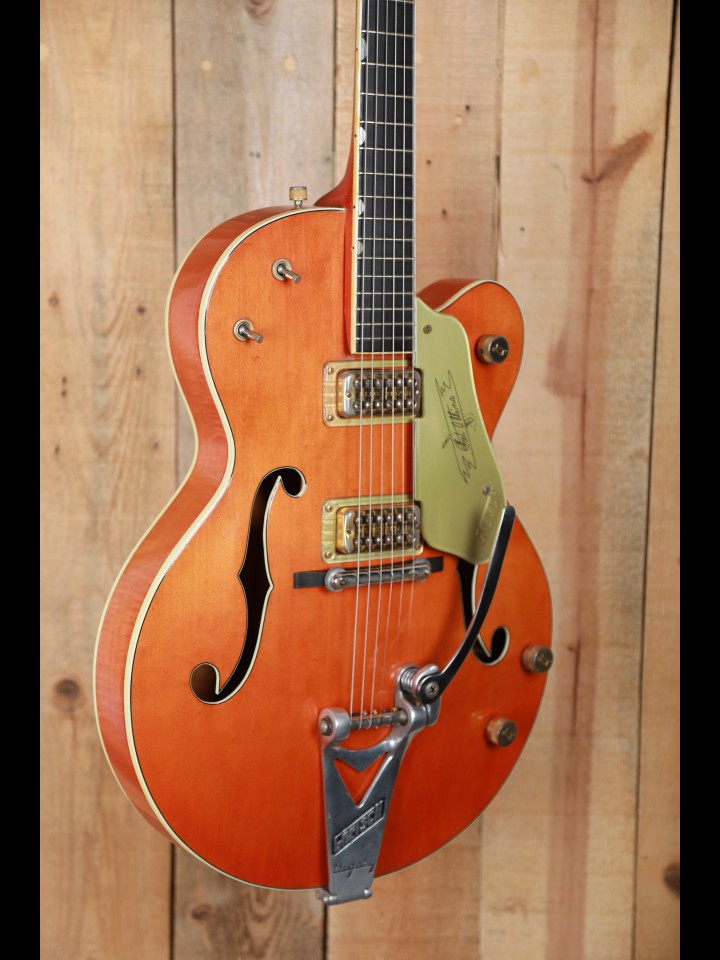
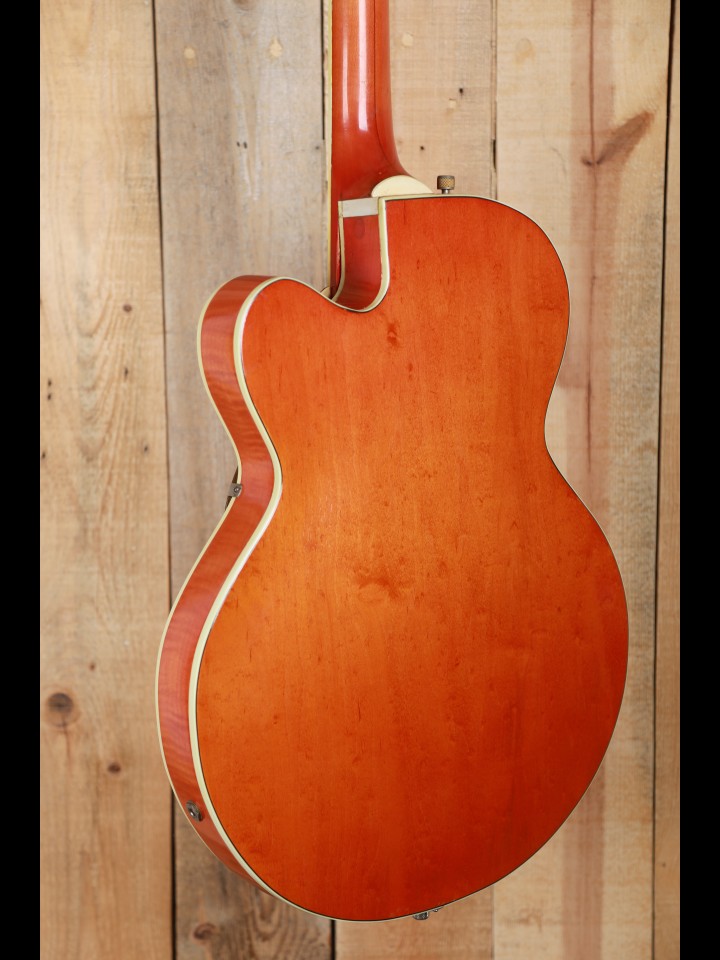
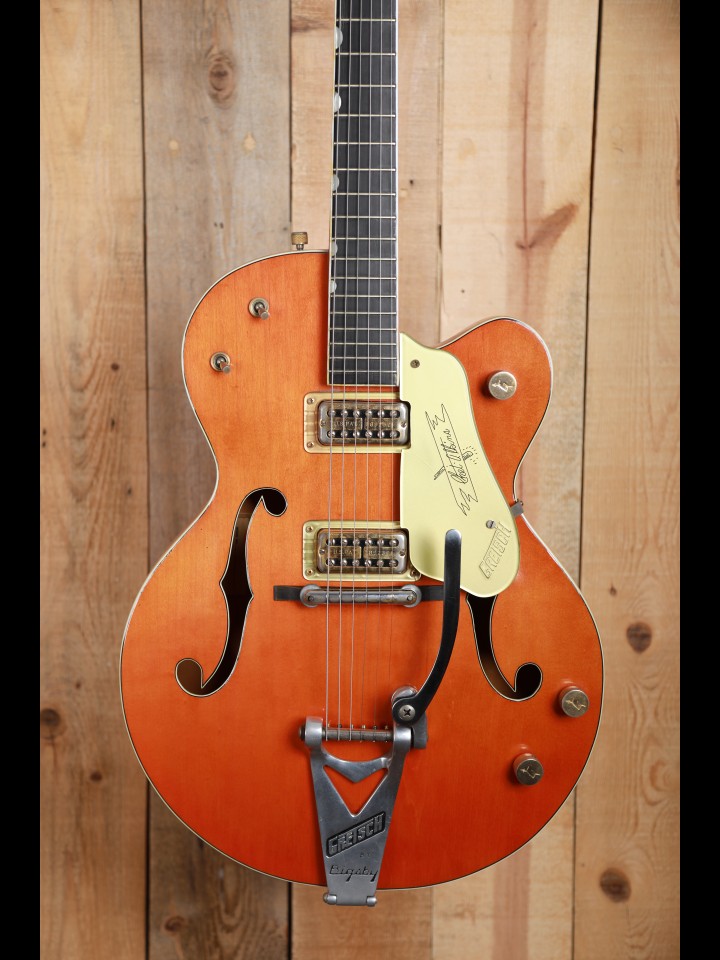
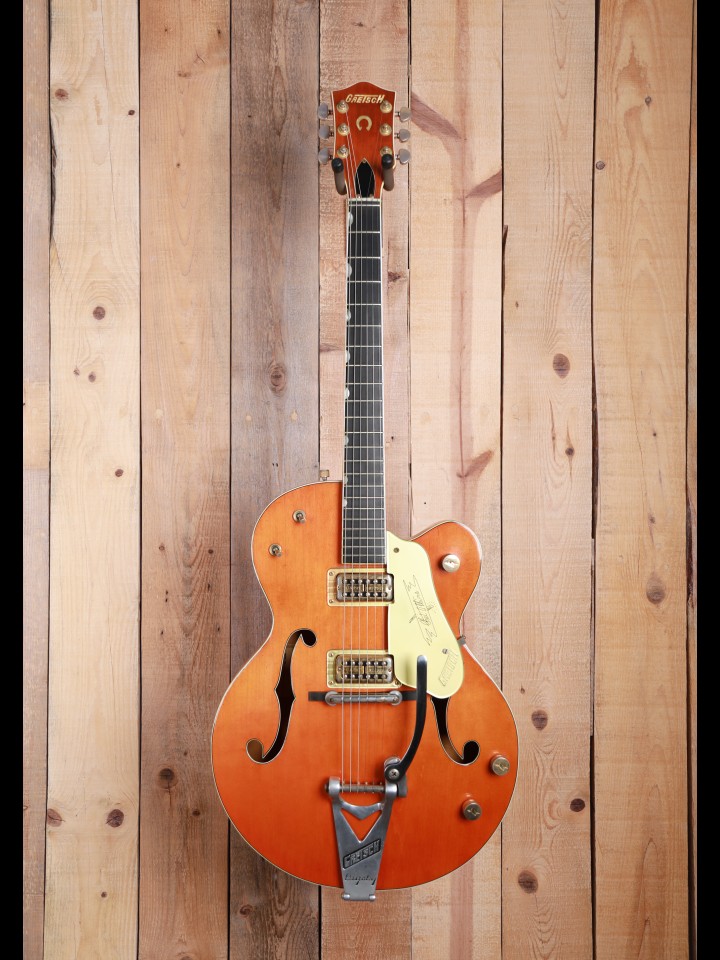
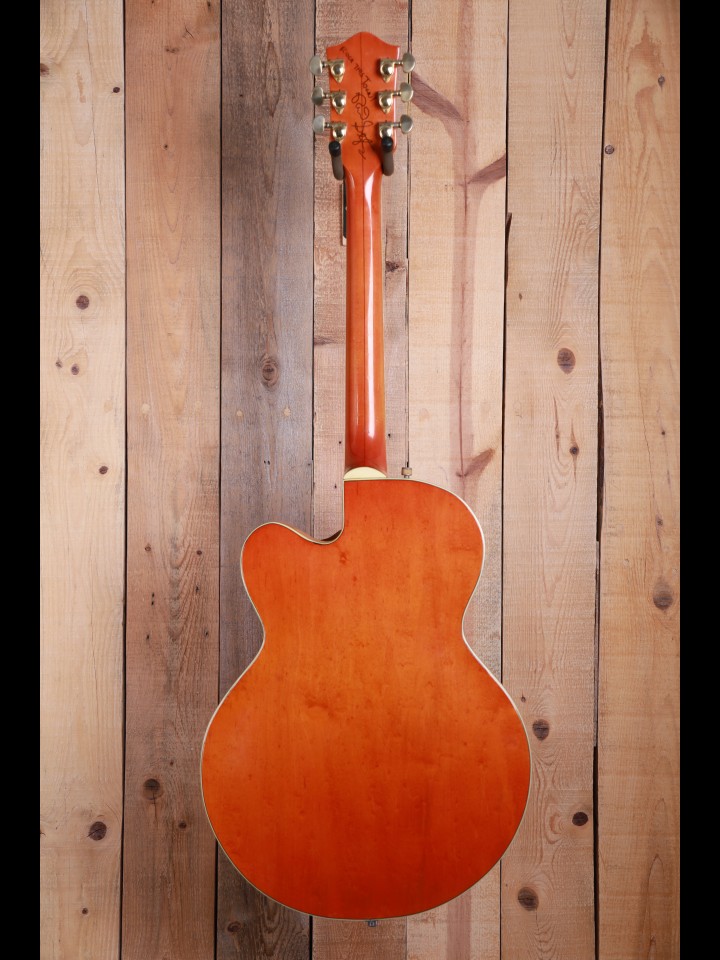
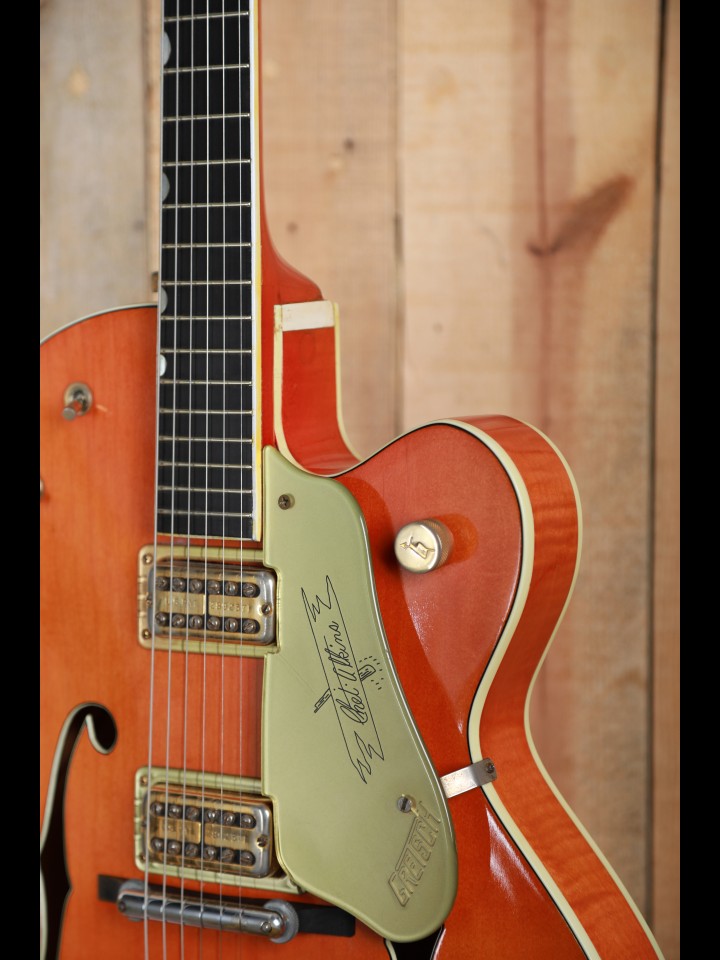
Along that line, the Gretsch 6120 is without question one of the most iconic vintage electric guitars on the planet. The exemplar of the distinctive translucent Western Orange finish, it is instantly recognizable. Naturally, the 6120 is associated with more than a few legendary players, including the likes of Chet Atkins, Eddie Cochran, and Brian Setzer. By the time this particular guitar was built in 1961, the model had undergone several meaningful changes, most notably with regard to body depth and pickups. At the time of its introduction in 1954, the trestle-braced, semi-hollow-ish 6120 was fairly slim relative to conventional hollowbody archtops with a depth of 2 7/8”. Yet, the body was slimmed to 2 ½” depth in 1960, and then slimmed further to 2 1/4” in 1961, when this guitar was produced. This mixture of slim depth and broader top dimension translated to a guitar that had a pleasing degree of acoustic presence and breadth but a very comfortable, compact feel. Meanwhile, the FilterTron humbucking pickups had first appeared on the 6120 (and the Gretsch line in general) in 1958, arriving on the scene on the heels of Gibson‘s introduction of their humbucking pickup in 1957. Clearly, the need to address inherent pickup hum, as well as the noise issues common in many performance venues at the time (which often lacked proper electrical grounding and also had an abundance of neon lighting) represented a race to the moon so to speak in the electric guitar world. In contrast to the Gibson humbucker, the Gretsch FilterTron is known for a brighter and more midrange-forward quality of sound that is punctuated with a certain twang and sparkle, now widely associated with rockabilly music. Needless to say, for any serious rockabilly enthusiast, Travis-style player, or vintage guitar collector, a 6120 of this era in this condition is a must have!
Condition
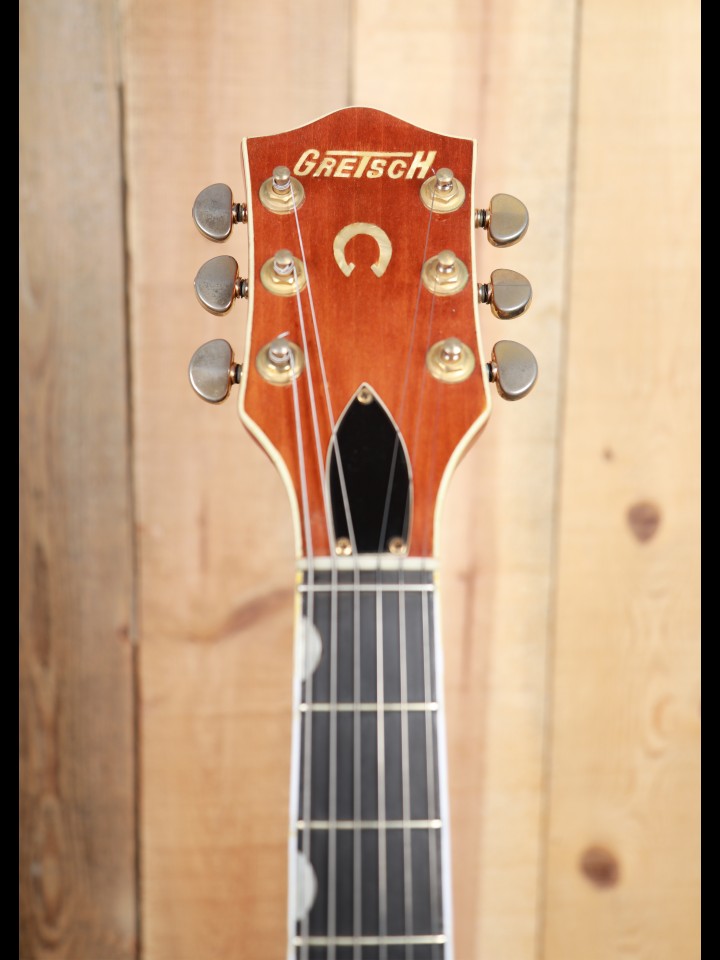
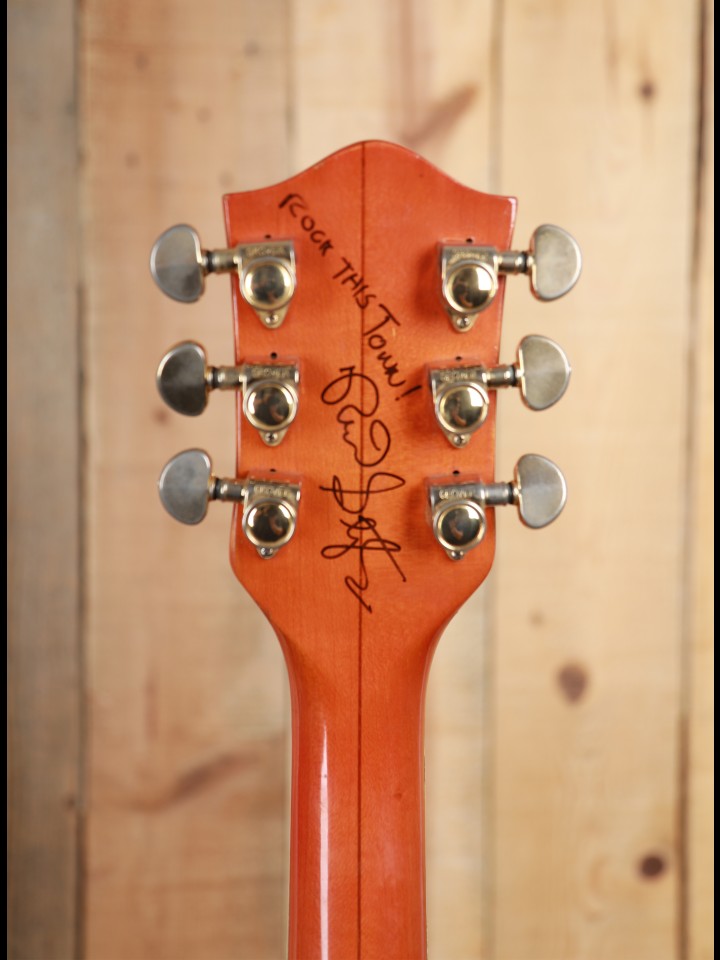
This particular 6120 is in remarkably clean condition for its age. It was formerly represented by TR Crandall Guitars in New York, and for those unfamiliar, Tom Crandall is widely regarded for having instruments in lust worthy condition. Subsequently, there are but a few condition issues to note. Most obviously, the original tuners have been changed out for Grover Rotomatics sometime in the fairly distant past, judging from their patina. This fairly common modification is possibly overshadowed by another more fun and forgivable modification/addition, that being a Brian Setzer autograph on the back of the headstock with Brian‘s customary “rock this town!” inscription. Otherwise, all other hardware and electronics appear to be original and in excellent condition.
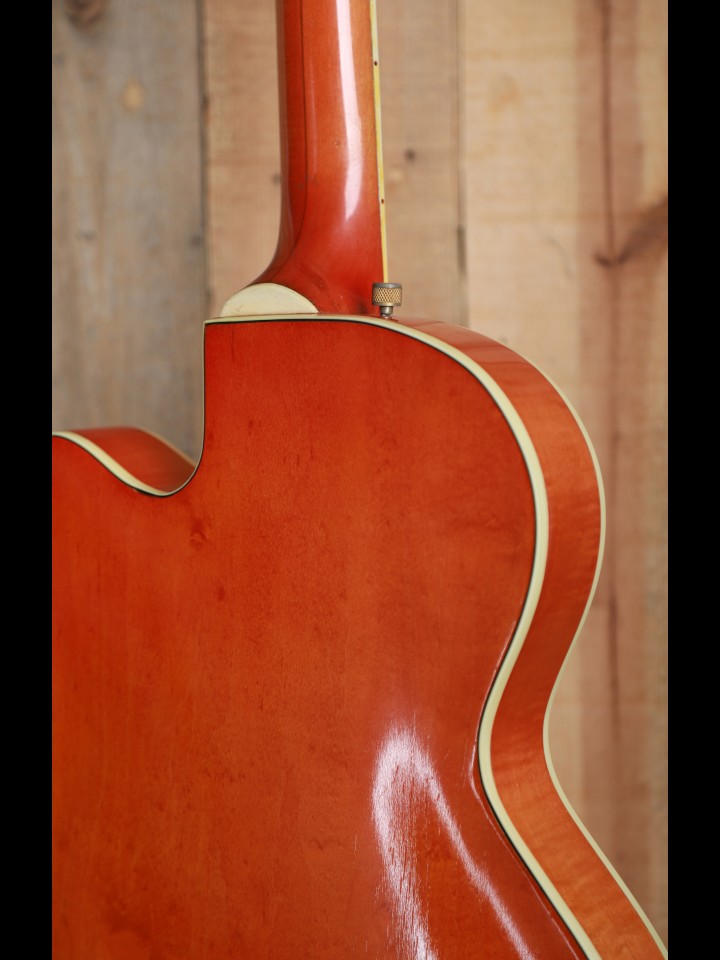
In evaluating the structural elements of this guitar, we feel fairly confident in stating that the neck was reset at some point. We base this on what appears under blacklight to be a section of non-original binding along the neck joint at the cutaway, as well as some repaired stress cracks at the neck heel with some associated finish touchup. Whether this work was done by Tom Crandall, or someone else, the work was extremely well-executed. It is difficult to say if this guitar was refretted. If so, it was done a long time ago. The zero fret is almost certainly original, based on the appearance of the binding. Meanwhile, the appearance of the top of the fingerboard binding (which is whiter and missing any finish), definitely suggests previous fret-leveling and recrowning--we leveled and recrowned some frets upon its arrival here, but the condition of the fingerboard binding was as-is before we did any work (we are otherwise careful to guard/protect these areas whenever doing fret work). We do note that most frets show evidence of some faint glue residue adjacent to the fret wire, which is likely from someone stabilizing loose frets during a fret leveling; however, as it is more common for folks to glue in frets when re-fretting these days, it could be related to a re-fret. That said, given the gauge and height of the frets, the slightly irregular appearance of the fret ends (which, in some cases, appear to have been partly erased in the course of a few fret levels), we suspect that they are original.
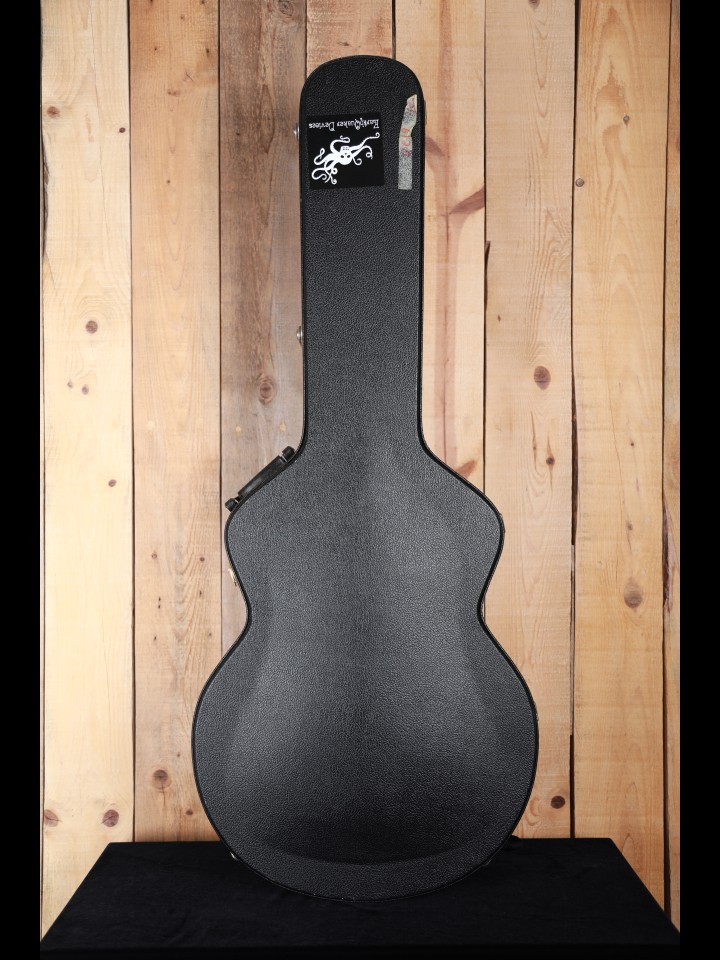
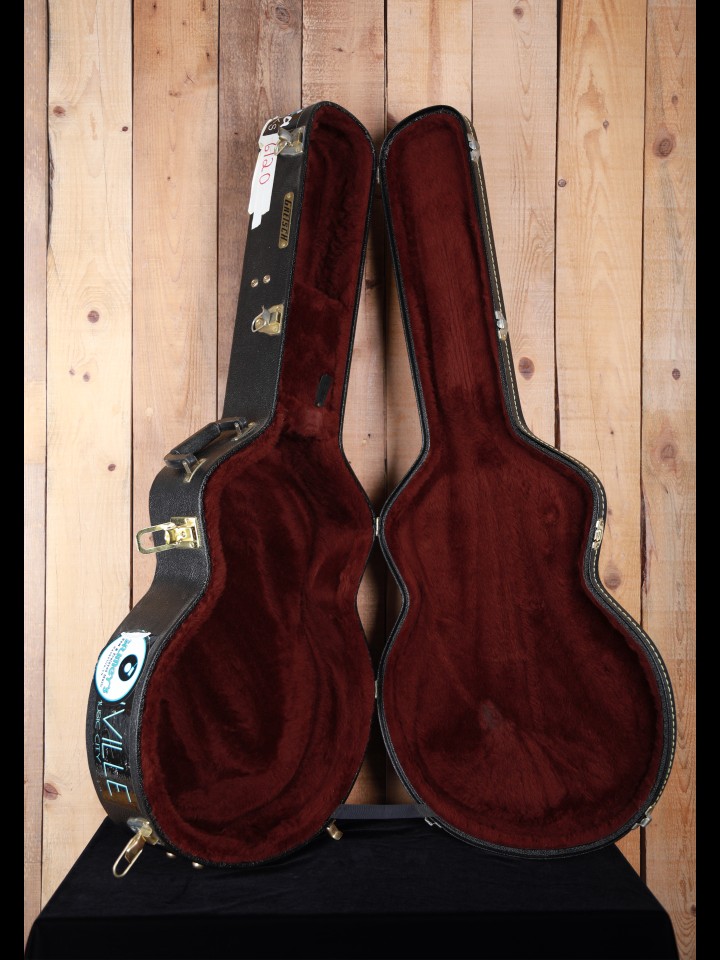
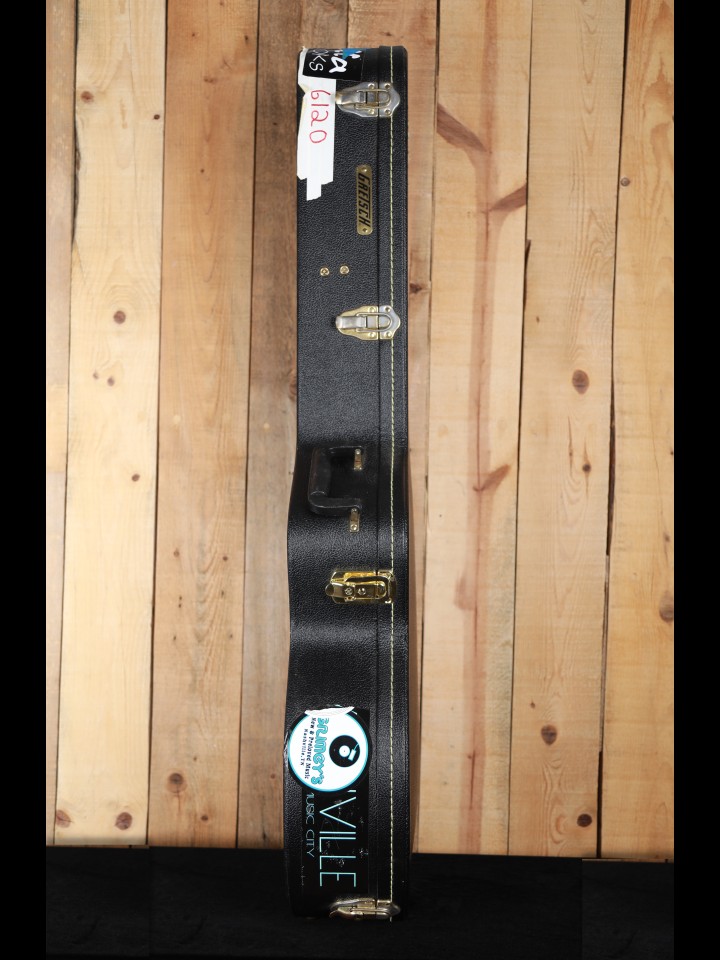
On a final note, the binding seems to be original and very stable; and, as such, it would be considered to be in remarkable condition for a Gretsch of this era. We base this on the relief that we can feel between the binding and the body that is a result of the binding shrinking, as well as the general appearance of the finish as it transitions from the body across the binding line. This is further supported by the fact that there are indeed a few areas where the binding has small gaps that are, again indicative of the shrinking of the material—recently-replaced binding would not have these gaps or relief shelves. We do note, however, that the binding appears to have been stabilized in these areas, which very likely was done by TR Crandall, who sold the guitar to its most recent owner. Finally, though we're always quick to state that blacklight analysis is not an exact science, blacklight evaluation here revealed a very consistent appearance to this guitar's finish and binding (apart from the section at the neck heel and cutaway and the heel cap). This guitar is packaged with a non-original, recent Gretsch hard case. EXCELLENT+ to NEAR MINT Condition
- Single Cutaway Hollow Body
- Laminated Maple Top
- Trestle Bracing
- Laminated Maple Back and Sides
- Western Orange Lacquer Finish
- Crème Binding
- Black Purfling
- Maple Neck
- Ebony Fingerboard
- Pearloid Thumbprint Inlays
- Inlaid Pearloid “Gretsch” Peghead Logo with Horseshoe
- Adjustable Ebony Bridge with Bigsby B-6 Tailpiece
- Master Volume Knob
- 3-Way Tone Switch
- G Arrow Control Knobs
- Gold Lucite Pickguard with Atkins Logo
- Gold Hardware
- Non-Original Gold Closed Gear Grover Tuners
- Two FilterTron Humbucking Pickups with Gold Covers
- Zero Fret
- Bone Nut
- 1 11/16th” Nut Width
- 24 ¾” Scale Length
- Hardshell Case
| Brand | GRETSCH |
| Model | 1961 6120 |
| Serial Number(s) | 40734 |